
Real-Time AI Translation — From Japanese to English
Instant, accurate speech-to-speech and caption translation powered
by Palabra.ai. Break language barriers in live business meetings,
global conferences, webinars, and everyday conversations —
from seamless Japanese-to-English translation to 60+ languages
with under 1-second latency, live subtitles, transcripts,
and easy API integration.

Trusted by top teams


Why Real-Time Translation Matters Today
Language barriers disrupt global business, costing time and opportunities in meetings with Japanese partners. Palabra.ai delivers real-time AI translation, enabling seamless communication without interpreters. Businesses using live translation report 80% better engagement across borders.
Palabra vs Human Interpreters
Palabra leverages a proprietary, high-performance Large Language Model (LLM) to function as a seamless, real time voice translator.
. By integrating end-to-end speech-to-speech translation with advanced voice synthesis, it maintains the emotion and natural cadence of the original speaker, making it a powerful tool for global collaboration, webinars, and professional events.| Features | Palabra AI | Human Interpreters |
| Real-time speech translation | ||
| Voice cloning (preserves tone/identity) | ||
| Custom business glossaries | ||
| Private server deployment options | ||
| Private server deployment options | ||
| Latency | < 1 second | N/A (human delay) |
| Audio output | ||
| Captions & subtitles | ||
| Transcripts | ||
| On-demand, 24/7 access | ||
| Setup time | Minutes | Hours/Days |
| Special equipment needed | None |
Sound booths & headsets |
| Consistency of quality | High, Consistent | High, Variable |
| Cost-efficiency | Low price, scalable |
High (pay by language) |
How Palabra AI Translates Japanese
to English Seamlessly
Powered by our advanced speech translation api, the AI delivers real-time Japanese speech translation through advanced speech-to-text, neural machine translation, and text-to-speech synthesis. It preserves nuance, including idioms and accents, with 98% accuracy on Japanese -English pairs.
Live AI Translation & Captions —
How It Works
It transcribes, translates in real time, and generates dual-language captions or dubbed audio. A low-latency streaming API keeps everything in sync for events with thousands of attendees. Editable transcripts and summaries can be exported instantly.
Real Scenarios: Business & Professional Use

Staff training
On-demand translation.

Industry conferences
Multilingual captions on big screens.

Company meetings
Inclusive all-hands with global teams.

Customer webinars
Broader reach without subtitles prep.

Business meetings with Japanese clients
Real-time voice dubbing for negotiations.
Palabra Supported Language Pairs
| Japanese to English Translation | English to Japanese Translation |
| Japanese to Arabic Translation | Arabic to Japanese Translation |
| Japanese to Bengali Translation | Bengali to Japanese Translation |
| Japanese to Chinese Translation | Chinese to Japanese Translation |
| Japanese to Dutch Translation | Dutch to Japanese Translation |
| Japanese to French Translation | French to Japanese Translation |
| Japanese to German Translation | German to Japanese Translation |
| Japanese to Hindi Translation | Hindi to Japanese Translation |
| Japanese to Italian Translation | Italian to Japanese Translation |
| Japanese to Korean Translation | Korean to Japanese Translation |
| Japanese to Portuguese Translation | Portuguese to Japanese Translation |
| Japanese to Russian Translation | Russian to Japanese Translation |
| Japanese to Spanish Translation | Spanish to Japanese Translation |
| Japanese to Thai Translation | Thai to Japanese Translation |
| Japanese to Turkish Translation | Turkish to Japanese Translation |
| Japanese to Vietnamese Translation | Vietnamese to Japanese Translation |
Translate in Real-Time with AI
Choose from three approaches:

No app needed
Add Palabra to your live stream in a browser. Viewers just click to listen or read in any language on any device.

Use human voices
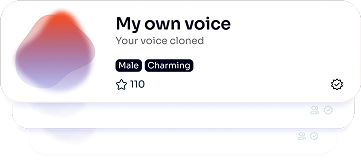
No robotic voices - clone your own or use ours, modeled after professional interpreters.

Exceed human-level quality at 4x less cost
Last-minute changes, one-click languages, 24/7 interpretation. Pay only for what you use.
AI wins for speed and scale.
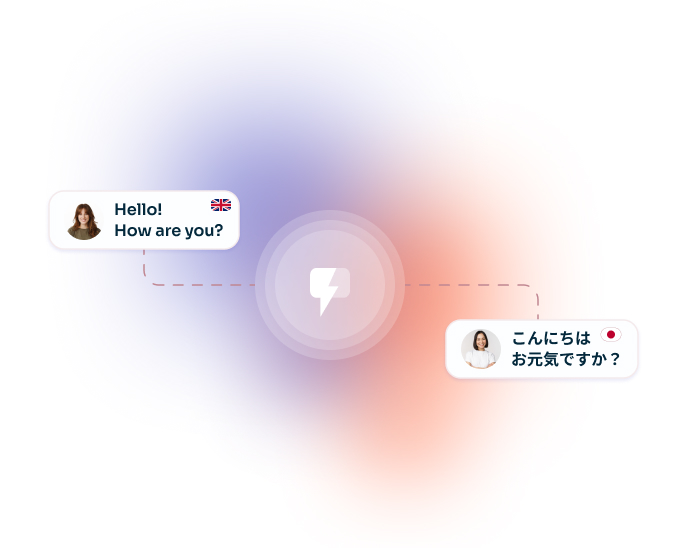
Japanese Audio Input → Palabra AI Processing →
English Audio + Captions Output
English Audio + Captions Output
Key Features of Palabra AI Translation
60+ Languages
Full Japanese-English support with custom glossaries.
Real-time captions
Speech-to-text captions (captions-only mode available).

Security
GDPR-compliant, no data storage.

Attendee access
Join via browser link or QR code (no app) to get translation/captions in a preferred language.

Streaming API
Real-time streaming API; SDKs/clients for Python and JavaScript (Node.js).

Easy to integrate
with most communication solutions
with most communication solutions
You can keep your current solutions — Palabra integrates easily with anything from a simple Zoom call to multistep RTMP → OBS → Castr streams.

Sound Naturally
The AI live audio translation always sounds natural: replicate your own voice for translation or select one from our library.
Everyday Uses Beyond Business Meetings
Translate travel vlogs, online courses, podcasts, or family calls from Japanese. Localize YouTube streams or religious sermons effortlessly.
Why Choose Palabra AI for Live Translation
Palabra.ai outperforms competitors with lower latency, higher accuracy,
and flexible pricing (credits). No hardware needed — just internet.
Trusted by events and enterprises worldwide.
FAQ
Does Palabra support Japanese dialects?
Yes. Palabra supports Japanese in real-time speech translation workflows, and its Japanese translation coverage is designed for live meetings, webinars, and multilingual events.
What Japanese dialects are most common?
The most commonly discussed varieties include Kansai-ben, Tohoku dialects, Kyushu dialects, Hokkaido-ben, and standard Tokyo-based Japanese
Can Palabra work with standard Japanese and regional dialects?
Yes. Palabra is built for real-time translation workflows and can handle Japanese input in live settings where dialect awareness is important.
Why does Japanese dialect support matter?
Japanese dialects can differ in pronunciation, vocabulary, grammar, and sentence endings, so dialect awareness helps preserve meaning and tone more accurately.
Japanese dialects can differ in pronunciation, vocabulary, grammar, and sentence endings, so dialect awareness helps preserve meaning and tone more accurately.
No. Standard Japanese, or hyōjungo, is widely understood, but regional dialects like Kansai-ben or Hakata-ben can sound and read very differently.
Get Started Today
Getting started is easy and quick, with no onboarding expenses or delays. You can either book a demo for a personalized walkthrough or select “Try for free” to experience Palabra's capabilities directly.
