Hebrew translator apps are incredibly useful – until the program you chose gets confused by the right-to-left (RTL) text direction, misses crucial cultural context, or simply refuses to function without an internet connection.
We tested the most popular Hebrew translation tools in real-world scenarios: during travels, language learning, business meetings, and live streams, to determine which ones truly deliver.
The table below highlights the ideal use cases for the best Hebrew translation apps, ranging from casual travel conversations to professional, real-time simultaneous event translation.
Best Hebrew Translation Apps (Quick Comparison)
| App | Offline Mode | Voice Translation | Camera Translation | Best For |
| Palabra | ❌ | ✅ | ❌ | Online meetings, live streams, conferences, AI dubbing |
| Talo | ❌ | ✅ | ❌ | All-in-one AI translation for calls, events, and streaming |
| Google Translate | ✅ | ✅ | ✅ | Quick daily translations and travel |
| Microsoft Translator | ✅ | ✅ | ✅ | Offline travel and basic conversations |
| Reverso Context | ❌ | ⚠️ | ✅ | Idioms, context-based learning, and precise text scanning |
| SayHi Translate | ❌ | ✅ | ❌ | Two-way real-time voice dialogue |
| DeepL | ❌ | ❌ | ❌ | Highly accurate official and business text translation |
Legend: ✅ Supported | ❌ Not Supported | ⚠️ Limited / Mode Dependent
Review of the 7 Best Hebrew Translator Apps
1. Palabra (Palabra.ai)
Simultaneous voice translation and real-time subtitling with sub-1 second latency.
Palabra is not just a basic phrase translator. It is a powerful AI platform built for real-time simultaneous translation during video calls, conferences, webinars, and media workflows. Instead of translating sentence-by-sentence with awkward pauses, Palabra transforms spoken Hebrew (or any of its 60+ supported languages) into live audio streams or text subtitles. The platform runs on its proprietary Large Language Model (LLM) infrastructure, ensuring a deep understanding of complex Hebrew context.
What stood out:
- Instant Translation & Voice Cloning: The system automatically matches a similar voice or utilizes instant speaker voice cloning right out of the box-the translated Hebrew sounds natural, preserving the speaker’s vocal identity.
- Deep Integration: Connects seamlessly without code or plugins to Zoom, Google Meet, MS Teams, as well as streaming protocols (SRT, RTMP) for OBS or YouTube integration.
- Enterprise Security & Customization: Full data encryption with zero data retention, support for custom business glossaries to ensure precise terminology, and a flexible developer API.
- Pros: The ultimate solution for live meeting translation, streaming, captioning, and instant AI dubbing.
- Cons: Requires an active internet connection (not intended for casual offline tourism).
- Pricing: Free trial available, with flexible subscription tiers and API pricing.
2. Talo
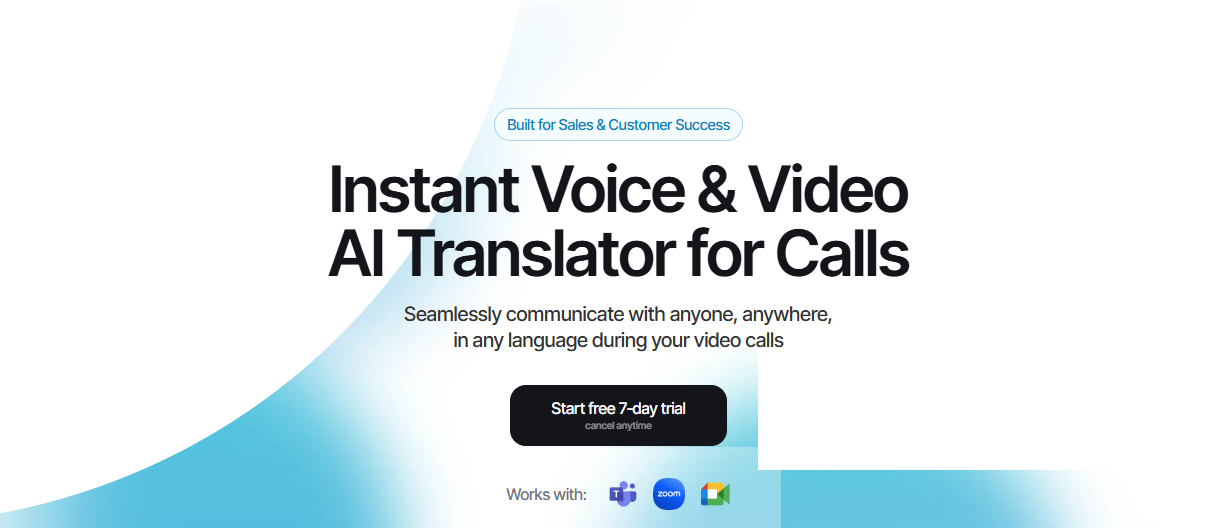
An all-in-one AI tool for calls, streaming, and corporate events.
Talo has joined the Palabra AI ecosystem following a recent acquisition and serves as a comprehensive, all-in-one user application aimed at erasing language barriers in real time. Talo handles the specific nuances of the Hebrew language exceptionally well, accurately recognizing both formal speech and modern Israeli slang.
What stood out:
- A unified interface combining translation for calls, broadcasts, and live in-person events.
- Exceptional processing speed powered by Palabra’s ultra-low latency infrastructure.
- Excellent for multilingual teams where Hebrew is one of the primary operational languages.
- Pros: A straightforward “all-in-one” solution for users who need high-quality live translation without complex configurations.
- Cons: Just like its sister platform, it relies entirely on a stable network connection.
3. Google Translate
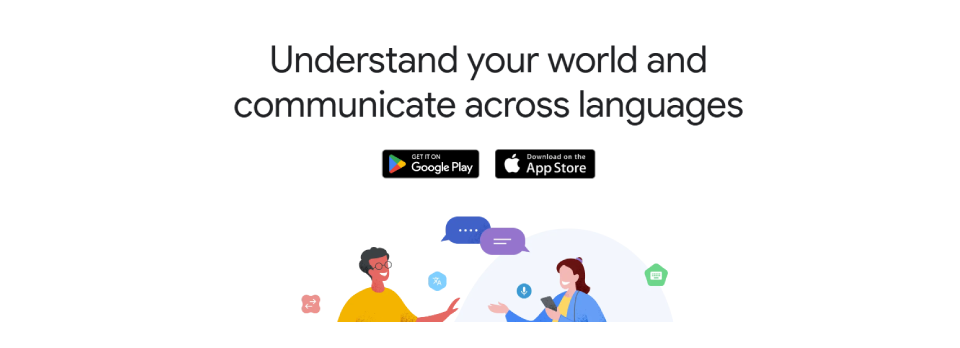
The most popular free translator for daily tasks and travel.
Google Translate remains an indispensable tool due to its accessibility and versatility. For Hebrew, its camera translation feature (Word Lens) is incredibly valuable in Israel, where street signs, price tags, and restaurant menus frequently lack English subtitles.
What stood out:
- Option to download the Hebrew language pack for complete offline functionality.
- Rapid real-time text scanning via your smartphone camera.
- Completely free with no volume limits.
- Pros: The best versatile and free assistant for travelers.
- Cons: Occasionally struggles with grammatical gender (which is strictly enforced in Hebrew verbs) and can produce overly literal, “robotic” phrasing for complex sentences.
4. Microsoft Translator

A reliable tool for offline conversations.
Microsoft’s main competitor offers high-quality integration for Hebrew translation. The app features a highly intuitive “conversation mode” with a split screen, allowing two individuals to speak face-to-face in different languages.
What stood out:
- Clean, accurate translation of formal phrases.
- Robust offline dictionaries for Hebrew.
- Stable and reliable image-to-text translation capabilities.
- Pros: Excellent text recognition algorithms and well-structured offline packages.
- Cons: Its colloquial slang database is updated less frequently than some competitors.
5. Reverso Context
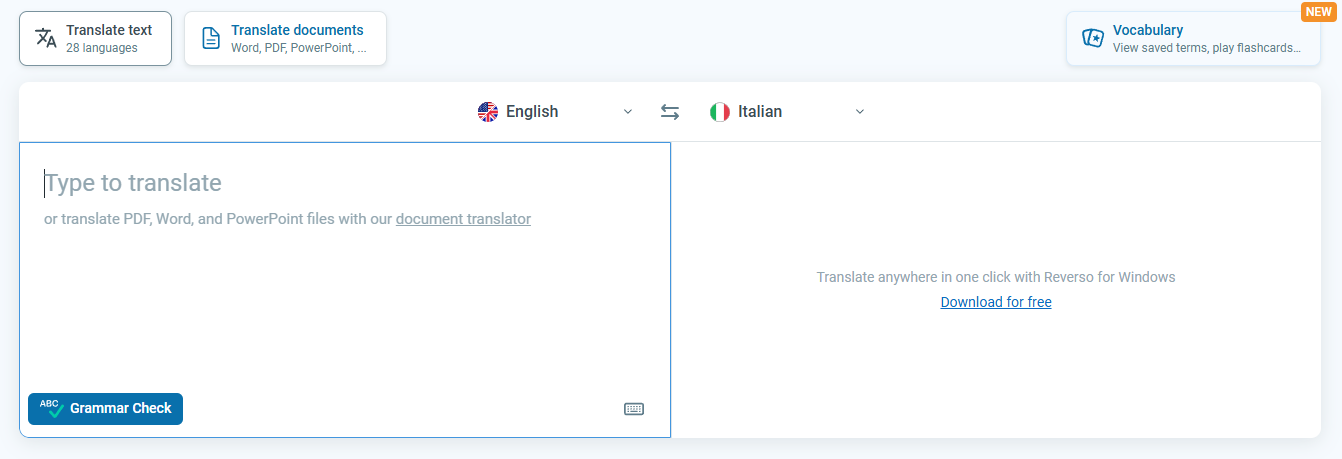
Best for contextual translation, idioms, and learning the nuances of Hebrew.
Reverso takes a unique approach by translating Hebrew words and phrases within the context of real-world sentences pulled from movies, official documents, and websites. Since Hebrew relies heavily on context and roots (shorashim), Reverso is an incredible tool for understanding exactly how a word is used in everyday life.
What stood out:
- Comprehensive context-matching that shows Hebrew words used in dozens of real sentence examples.
- Built-in Hebrew conjugation tools, which are essential given the complex verb structures (binyanim) of the language.
- Integrated camera scanning feature to read and analyze printed Hebrew text on the go.
- Pros: Unmatched for learning slang, idioms, and understanding the precise cultural context of Hebrew phrases.
- Cons: Not designed for continuous live dialogue or long-form corporate document translation.
6. SayHi Translate
A streamlined tool for real-time, two-way verbal dialogue.
SayHi is designed to do exactly one job perfectly-helping two people talk to each other in real time. You speak in your native language, the app speaks the phrase aloud in Hebrew, and vice versa.
What stood out:
- An ultra-simplified user interface featuring two large language buttons.
- High accuracy in recognizing diverse Israeli accents and pronunciations.
- Adjustable audio playback speeds for the translated text.
- Pros: Ideal for casual, everyday dialogues (e.g., chatting with a taxi driver or a market vendor).
- Cons: Works strictly online and has zero features for document or photo translation.
7. DeepL
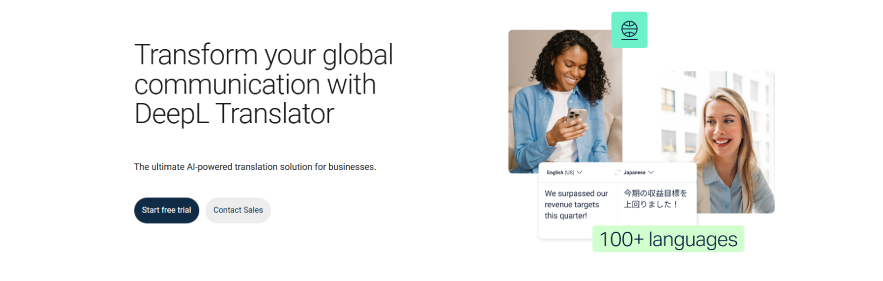
The gold standard for accurate written text translation.
DeepL is universally recognized for its advanced neural network algorithms. Hebrew was added to its roster relatively recently, but it already demonstrates superior results when processing long articles, business correspondence, and official documentation.
What stood out:
- The most natural-sounding and grammatically accurate translation of long texts.
- Excellent handling of business contexts and formal writing styles.
- Interactive synonym suggestions during the editing process.
- Pros: The premier app for dealing with legal contracts, corporate emails, and long-form texts in Hebrew.
- Cons: Completely lacks live simultaneous voice translation or camera scanning capabilities for travelers.
How to Choose the Best Hebrew Translator App?
- For business, online meetings, and conferences: Go with Palabra. It translates live speech instantly, offers voice cloning, and generates flawless real-time subtitles with virtually zero lag.
- For turn-key calls and streams: Choose Talo-a fast, modern, all-in-one AI solution for integrated communication needs.
- For travel and urban exploration: Download Google Translate or Microsoft Translator along with their offline packs to translate signs and menus via your camera without using cellular data.
- For deep learning and idioms: Use Reverso Context to look up specific phrases and master Hebrew verb conjugations.
- For document editing: DeepL will provide the highest accuracy for legal, technical, and corporate writing.
Tips for Translating Hebrew Using Apps
- Hebrew is gender-sensitive: Verbs and pronouns (“I want”, “you do”) change based on whether the speaker or listener is male or female. If a translation looks off, try adding explicit gender context to your source sentence.
- The absence of Vowels (Nikkud): Standard written Hebrew does not use vowels. While advanced AI models like Palabra are trained to understand the text based on context, simpler apps can misinterpret words that share identical consonant spellings. Keep your sentences structured to provide clear context.
Simplify phrases for basic apps: Short, direct sentences translate far more accurately than long sentences packed with complex clauses.