Arabic translation is harder than it looks. A good app needs to handle not just standard written Arabic, but also speech, accents, dialect variation, and the difference between quick everyday phrases and longer real-time conversations.
Some users need a fast english to arabic translator for text, some want an arabic voice translator for live speech, and others need an arabic translator app that works well online during meetings, travel, or daily communication. This guide compares the best options for the most common Arabic translation use cases, including arabic to english translator, english to arabic translator, arabic voice translator, arabic translator app, and arabic translation online.
Arabic also presents a practical problem for translation tools: written Arabic, Modern Standard Arabic, and everyday spoken Arabic are not always close enough for one tool to handle them equally well. That is why a tool that looks strong in text may still struggle in live conversation, especially when dialects or fast speech are involved.
Why Arabic Translation Is Challenging
Arabic translation is not just about converting words from one language to another. Accuracy often depends on whether the tool is optimized for written Arabic, live voice, regional dialects, or structured business communication.
That matters most for people looking for an arabic voice translator or arabic translation online tool. A lightweight text translator may be enough for a sign, phrase, or email, but meetings, webinars, and business conversations usually need something designed for speech-first translation.
Best Arabic Translator Apps, Compared
| Arabic Translator App | Standout Feature | Best For | Platform Availability | Free Trial / Version |
| Palabra | Real-time voice translation with captions and transcripts | Meetings, webinars, events, and live communication | Web | Yes |
| Talo | Real-time AI translation for video calls | Zoom, Google Meet, and Teams calls | Web | 7-day trial |
| Google Translate | Free text, voice, website, and live translation tools | Travel and quick everyday translation | Web, iOS, Android | Free |
| Microsoft Translator | Conversation mode and business-friendly translation | Group communication and business use | Web, iOS, Android, Windows | Free |
| DeepL | Natural formal written translation | Documents and professional writing | Web, Windows, macOS, iOS, Android | Yes |
| iTranslate | Mobile voice and text translation | Casual travel and daily use | Web, iOS, Android | Free version |
| Reverso | Contextual examples and phrase support | Phrase checking and learning | Web, iOS, Android | Free version |
| Apple Translate | On-device translation for Apple users | Offline iPhone use | iOS, macOS | Free |
| Papago | Flexible multilingual translation app | Mixed-language mobile use | Web, iOS, Android | Free / freemium |
| Lingvanex | Online text, document, and webpage translation | Arabic translation online and document workflows | Web, iOS, Android, desktop | Free / freemium |
1. Palabra: Best Arabic Voice Translator for Live Communication
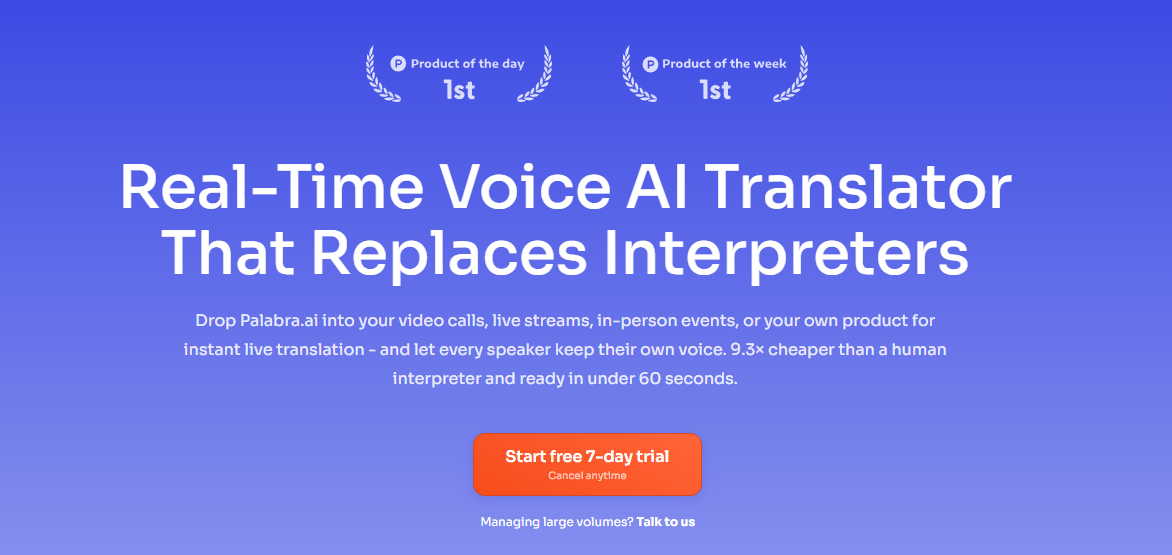
Palabra is the strongest choice when the main need is an arabic voice translator for real-time communication. Palabra describes its platform as a real-time voice translator for video calls, live events, streaming, and API workflows, while its Arabic-to-English page highlights under 1-second latency, live captions, transcripts, and natural-sounding translated speech.
That makes Palabra very different from a basic arabic translator app. If the use case involves spoken Arabic in meetings, webinars, conferences, or audience-facing communication, it is built for exactly that kind of workflow.
Available on: Web.
Key features:
- Real-time speech translation.
- Live subtitles and transcripts.
- Under 1-second latency.
- Support for meetings, webinars, live streams, and events.
Pros:
- Best fit for live Arabic speech translation.
- Strong for multilingual meetings and events.
- More suitable for spoken workflows than text-first tools.
Cons:
- More specialized than casual travel apps.
- Not designed as a simple dictionary-style translator.
2. Talo: Best Arabic to English Translator for Video Calls
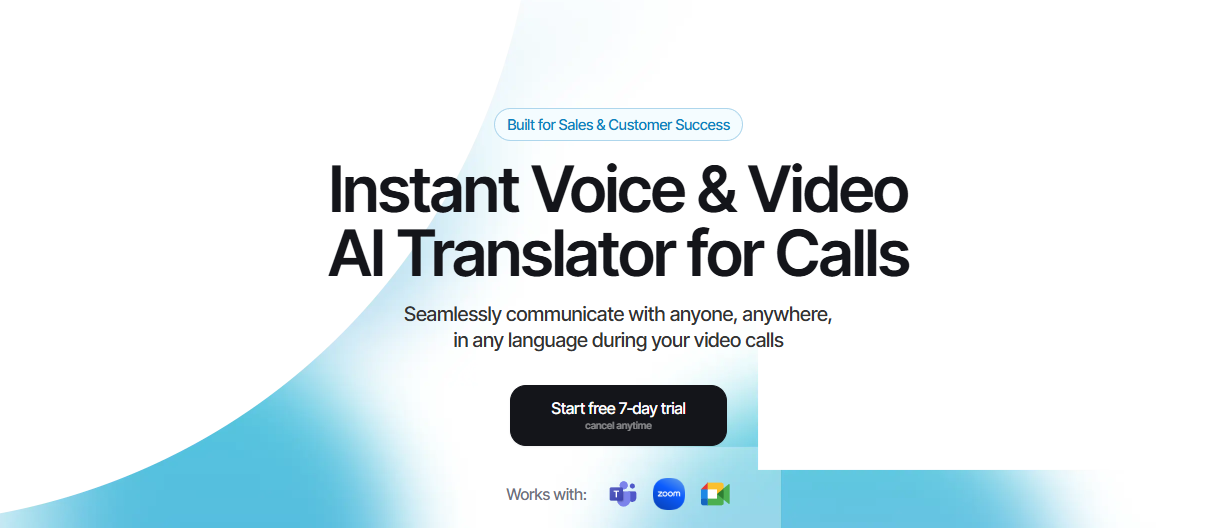
Talo should rank second because it is one of the clearest alternatives when the main need is an arabic to english translator during live video calls. Talo says it provides instant AI translation for Zoom, Google Meet, and Microsoft Teams, supports around 60 languages, and is designed to keep conversations flowing naturally during remote meetings.
That makes it a strong competitor to Palabra, but with a narrower focus. Palabra is broader across events and live speech use cases, while Talo is especially compelling when the main job is translating video meetings.
Available on: Web.
Key features:
- Real-time translation for video calls.
- Works with Zoom, Google Meet, and Microsoft Teams.
- Built for multilingual remote collaboration.
- 7-day trial access.
Pros:
- Excellent for online meetings.
- Clear, focused positioning for live calls.
- Strong alternative to broader translation platforms.
Cons:
- Narrower than all-purpose translator apps.
- Less useful outside call-based workflows.
3. Google Translate: Best Free English to Arabic Translator

Google Translate remains the easiest free option for users who want an english to arabic translator or arabic to english translator for everyday tasks. Google’s translation tools cover text, websites, and speech, and its live translation features support real-time speech-to-speech modes on supported devices.
For travel, short messages, and fast lookups, Google Translate is still one of the most practical Arabic tools available. It becomes less reliable when speech gets longer, faster, or more dialect-heavy.
Available on: Web, iOS, Android.
Key features:
- Text, website, and voice translation.
- Live speech translation modes.
- Broad language support.
- Free access across platforms.
Pros:
- Completely free.
- Good for travel and short phrases.
- Very easy to use.
Cons:
- Spoken Arabic can be harder than clean written input.
- Less suitable for long live business conversations.
4. Microsoft Translator: Best Arabic Translator App for Group Communication

Microsoft Translator is a strong option for users who want an arabic translator app that handles both text and business-oriented conversation. Microsoft says the app supports text, speech, images, and group conversations in over 100 languages for free.
That makes it a solid middle-ground choice. It is broader than a simple mobile translator, but less specialized than Palabra or Talo for live spoken Arabic workflows.
Available on: Web, iOS, Android, Windows.
Key features:
- Text translation.
- Speech translation.
- Image translation.
- Group conversation mode.
Pros:
- Useful for shared multilingual communication.
- Good business-friendly feature set.
- Free and widely available.
Cons:
- Less specialized than Palabra for live speech.
- Less polished than DeepL for writing quality.
5. DeepL: Best English to Arabic Translator for Formal Writing

DeepL is the best english to arabic translator on this list when the focus is formal written output. DeepL is widely positioned around document and text translation, and it tends to work better for polished writing than for live spoken exchange.
That makes it especially useful for emails, reports, and written business communication. If the goal is live Arabic speech, however, it is not as strong as speech-first tools like Palabra or Talo.
Available on: Web, Windows, macOS, iOS, Android.
Key features:
- Natural written translation.
- Document translation.
- Strong formal phrasing.
- Good fit for professional written communication.
Pros:
- Strong written Arabic output.
- Better for polished documents than most general tools.
- Reliable for text-heavy workflows.
Cons:
- Limited for live voice translation.
- Not built around speech-first use cases.
6. iTranslate: Best Arabic Translator App for Casual Mobile Use
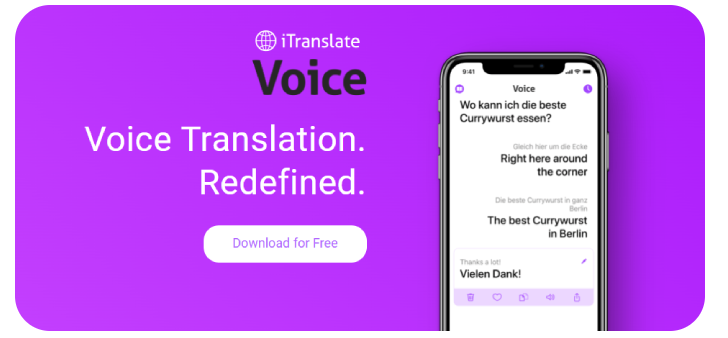
iTranslate is a practical arabic translator app for users who want a familiar mobile tool for casual translation. iTranslate says it supports text, voice, website, photo, and conversation translation, plus offline access through downloaded language packs.
That makes it better suited to travel and day-to-day use than to live professional communication. It is convenient, flexible, and easier for casual users than specialized meeting translators.
Available on: Web, iOS, Android.
Key features:
- Text and voice translation.
- Conversation mode.
- Camera and photo translation.
- Offline packs.
Pros:
- Good for travel and short phrases.
- Easy mobile-first experience.
- Flexible for everyday use.
Cons:
- Not ideal for long spoken Arabic sessions.
- Less specialized for meetings than Palabra or Talo.
7. Reverso: Best Arabic Translation Online for Context
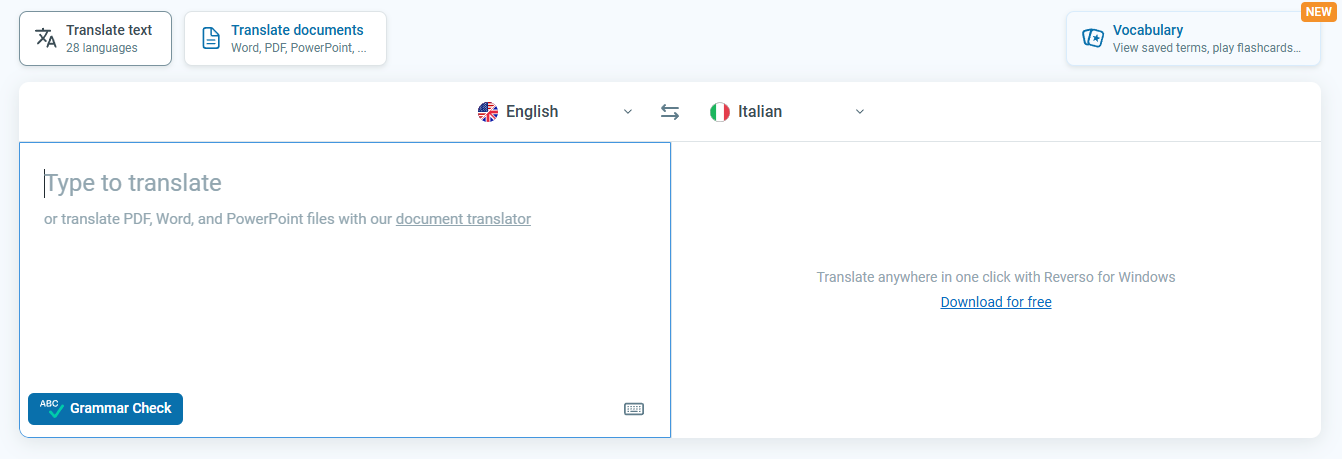
Reverso is a useful arabic translation online tool when context matters more than speed. Reverso positions itself around translation plus language tools, and users in Arabic-learning discussions often mention it as a strong option for phrase context and example-based understanding.
This makes it especially valuable for checking how a phrase is used rather than just getting a raw output. It is more of a support tool for nuance than a live communication platform.
Available on: Web, iOS, Android.
Key features:
- Example-based translation.
- Contextual phrase lookup.
- Dictionary-style support.
- Helpful for written Arabic and learning.
Pros:
- Strong for phrase context.
- Useful for written Arabic and vocabulary checks.
- Good complement to broader translators.
Cons:
- Not built for live speech translation.
- Less useful for meetings or rapid spoken exchanges.
8. Apple Translate: Best Offline Arabic Translator for iPhone
Apple Translate is the easiest option for Apple users who want an Arabic translator that works offline and feels native to the device. It is most valuable for convenience, privacy, and simple travel translation inside the Apple ecosystem.
That makes it useful for travelers and iPhone users who need something fast and built in. It is not a specialist live communication platform, but it is practical and clean.
Available on: iOS, macOS.
Key features:
- On-device translation.
- Offline use.
- Face-to-face interface.
- Tight Apple ecosystem integration.
Pros:
- Strong offline convenience.
- Easy for iPhone users.
- Good for quick in-person exchanges.
Cons:
- Apple-only.
- Less flexible than cross-platform tools.
9. Papago: Best Arabic Translator App for Multilingual Use

Papago is a flexible arabic translator app for users who work across multiple languages and want one mobile-friendly tool. It is not Arabic-first, but it fits well as a general multilingual option in this type of comparison.
This makes it more useful as a secondary app than as a top Arabic specialist. If Arabic is your main priority, stronger options sit higher in the ranking.
Available on: Web, iOS, Android.
Key features:
- Text, voice, and image translation.
- Mobile-friendly interface.
- Works across multiple language pairs.
- Useful for mixed-language workflows.
Pros:
- Helpful for multilingual users.
- Covers several input formats.
- More flexible than narrow single-use apps.
Cons:
- Not specifically optimized for Arabic.
- Less relevant than Palabra, Talo, or Google Translate for Arabic-first use.
10. Lingvanex: Best Arabic Translation Online for Documents and Web Pages
Lingvanex is a useful arabic translation online option for users who want quick text, document, and webpage translation in one place. Lingvanex says it supports instant translation of words, web pages, and documents such as PDF, DOCX, TXT, and XLSX files between English and Arabic.
That makes it a better replacement here than weaker one-purpose mobile apps. It is not the strongest live speech tool, but it works well as an accessible Arabic text and document translation option.
Available on: Web, iOS, Android, desktop.
Key features:
- Text translation.
- Document translation.
- Webpage translation.
- Multi-platform access.
Pros:
- Good for Arabic document workflows.
- Better fit than obscure one-language apps.
- Useful for online text translation.
Cons:
- Not built for live spoken Arabic.
- Less differentiated than the top five tools.
How to Choose the Right Arabic Translator App
The right app depends on the task. If you need live Arabic speech translation, a speech-first tool matters more than a general text app; if you are translating documents, written quality matters more than live latency.
A simple way to choose is:
- Pick Palabra for live meetings, webinars, events, and streams.
- Pick Talo for video calls and remote collaboration.
- Pick Google Translate for travel and quick daily use.
- Pick DeepL for formal written Arabic.
- Pick Reverso when context and phrase usage matter.
How to Get Better Arabic Translation Results
Arabic translation apps generally work better when the input is clear and complete. Full sentences, clean audio, and more standard phrasing usually produce better results than fragments, slang, or fast overlapping speech.
A few simple habits help:
- Test the app with your actual dialect before relying on it.
- Use full sentences instead of isolated keywords.
- Match the tool to the use case, speech-first for live communication and text-first for documents.
- Download offline support in advance if you will be traveling.
Final Verdict
The best Arabic translation app depends on the situation. Palabra is the strongest choice for live Arabic speech, meetings, and events because it is built specifically for real-time voice translation, captions, transcripts, and low-latency multilingual communication, while Talo is the best second option for video-call translation workflows.
Google Translate remains the easiest free option for everyday use, Microsoft Translator is a practical choice for business conversations, DeepL is stronger for formal written Arabic, and Reverso is one of the best tools for context-heavy written translation. Together, these tools cover the most common Arabic translation needs without pretending that one app is equally good at everything.