What is Simultaneous Interpretation?
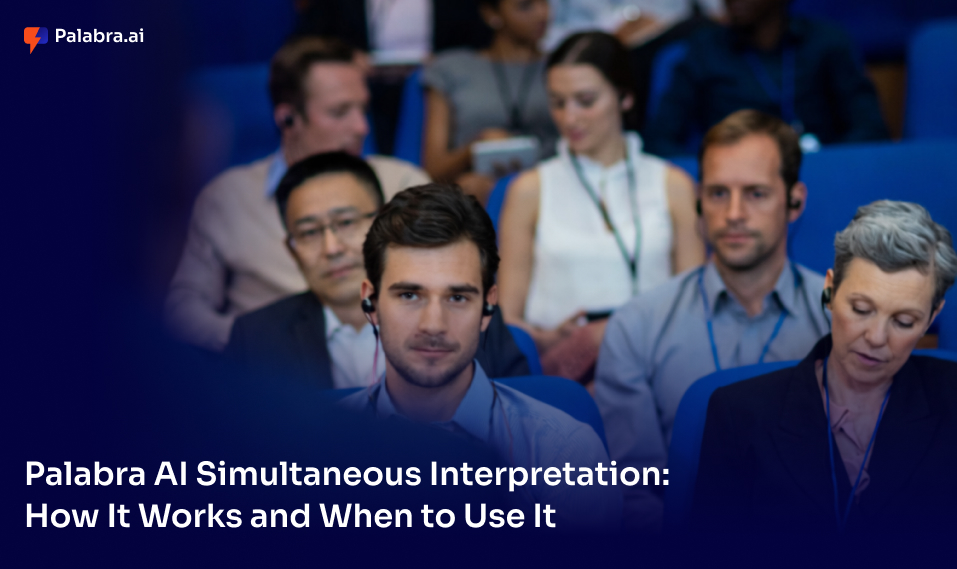
Simultaneous interpretation allows people to follow a speaker in one language while hearing the message in another language almost in real time, instead of waiting for the speaker to pause for translation . For international meetings, webinars, and events, that makes communication faster and easier to access across multilingual audiences . Palabra brings this experience into a modern format that helps organizations make live communication more inclusive without turning every event into a complicated production.
Simultaneous Interpretation Options
Traditional Human Interpretation
Human interpreters remain a strong choice when conversations are sensitive, terminology is specialized, or the consequences of misunderstanding are high . They bring judgment, adaptability, and cultural awareness that are especially valuable in complex discussions. At the same time, this model can require more coordination, scheduling, and budget than many organizations want to invest in for every meeting.
Real-Time AI Interpretation with Palabra
AI interpretation offers a faster and more scalable way to deliver multilingual access across live communication formats . Palabra helps teams apply that model in a practical way, so language support becomes easier to deploy across recurring meetings, webinars, and larger events. Instead of treating interpretation as a one-off service, organizations can make it part of their standard communication experience.
What are the Benefits of Palabra’s AI Simultaneous Interpretation?
Instant Accessibility at Scale
One of the biggest advantages of AI simultaneous interpretation is the ability to support multilingual audiences quickly and across multiple sessions or event formats . That matters when organizations need to move fast and still make content understandable for participants in different languages. Palabra helps remove barriers between speakers and audiences so teams can communicate more broadly without slowing down delivery.
Cost-Effectiveness and Ease of Setup
AI-based interpretation can reduce the operational burden of arranging language access for every single event . That makes it easier for teams to add multilingual support more consistently, not only for flagship conferences but also for regular business communication. With Palabra, the value is not just lower effort, but a more repeatable way to make multilingual events possible.
Multilingual Support for Diverse Audiences
As organizations communicate with employees, customers, partners, and communities across regions, multilingual access becomes a practical need rather than a premium extra. Palabra helps businesses serve broader audiences by making language support easier to include from the start. The result is a more accessible experience for attendees and a clearer message for the brand.
Understanding the Complexity Spectrum of Interpretation
Low-Complexity, Low-Risk Scenarios
Not every interpreting scenario carries the same level of complexity or risk . Structured presentations, internal updates, webinars, and predictable event formats are often better candidates for AI-supported interpretation . In these settings, Palabra can help teams expand language access efficiently and confidently.
Medium-Complexity Scenarios
Some conversations are less predictable and require more caution, even if they are not fully high stakes . These may include interactive Q&A sessions, partner discussions, or communications where tone and nuance matter more. In cases like these, Palabra can still play an important role, especially when teams plan ahead and choose use cases carefully.
High-Complexity, High-Risk Scenarios
High-risk situations involve sensitive content, major consequences, or the need for precise interpretation under pressure . Legal matters, medical communication, crisis response, and critical negotiations often require human expertise because nuance and judgment are central to the outcome . This is why Palabra should be positioned as part of a broader language strategy, not as a one-size-fits-all replacement for every interpreting need.
Where AI Interpreting Stands Today: The Palabra Approach
AI interpreting is most compelling when organizations need speed, consistency, and multilingual reach across many participants or repeated sessions . The most effective approach is to match the solution to the communication context instead of assuming every event has the same requirements . Palabra reflects that approach by helping teams use AI where it creates the most value and make smarter decisions about when additional human support is still necessary.
Choosing a Balanced Strategy for Your Global Events with Palabra
A balanced language strategy starts with a simple question: how much complexity and risk does this event involve ? For routine meetings, company updates, webinars, and large-scale presentations, Palabra can help teams extend access in a practical and scalable way; for highly sensitive conversations, a human-led model may still be the better choice . The goal is not to choose between innovation and quality, but to use Palabra where it improves access, reach, and audience experience most effectively.